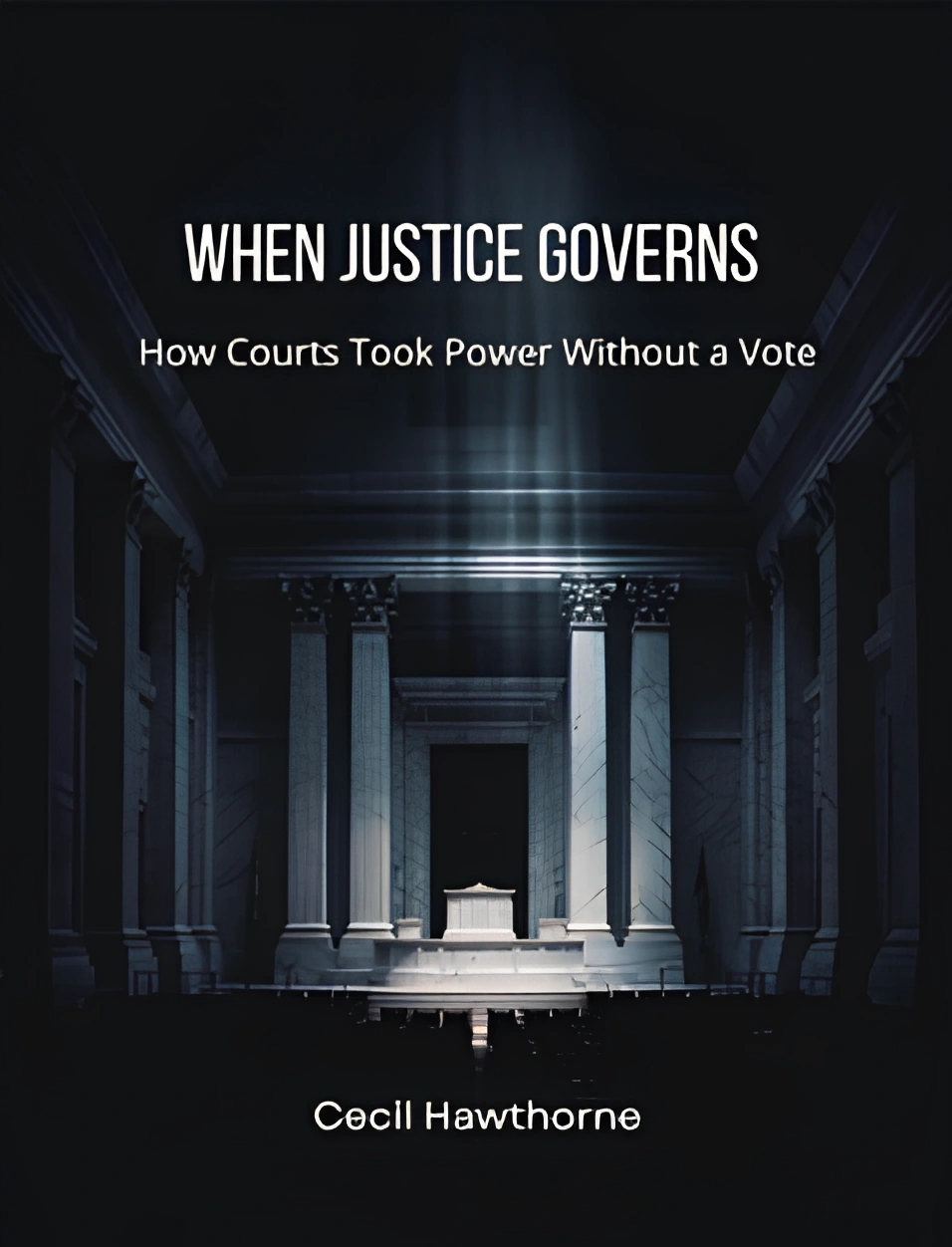
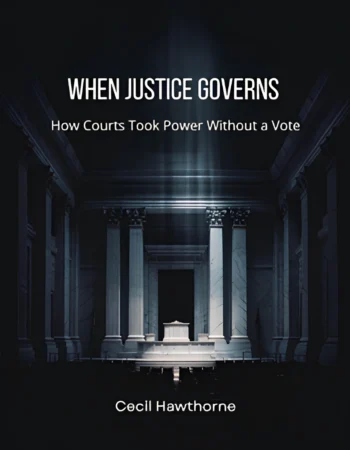
When Justice Governs
How Courts Took Power Without a Vote
By Cecil Hawthorne
In When Justice Governs, author and essayist Cecil Hawthorne delivers a sharp, urgent analysis of a growing global phenomenon: the silent rise of judicial power. Through clear argumentation and historical insight, he investigates how courts institutions that were once guardians of the law have increasingly become actors of political decision-making.
From the United States to Europe and beyond, this book shows how unelected judges now settle society’s most divisive questions on rights, freedoms, leadership, and national identity. Without votes or campaigns, they shape nations. Hawthorne asks: Is this still justice, or is it governance by another name?
“Justice no longer only interprets power it exercises it.”
About the author
Cecil Hawthorne is an independent writer and researcher specializing in the intersection of political history, strategy, and global affairs. With a background in historical analysis and a strong interest in the evolution of state power, Hawthorne’s work explores how past ideologies, conflicts, and leaders have shaped the world we live in today.
In this provocative essay, you’ll explore:
- How constitutional courts have become key political players
- The historical roots of judicial authority
- Why democratic systems have opened space for legal power to expand
- The risk of legitimacy crises in judicialized democracies
- Whether “rule of law” can quietly override “rule by the people”
Hawthorne blends legal theory, political philosophy, and real-world case studies to challenge how we think about law, authority, and legitimacy.
This is a must-read for political thinkers, law students, and anyone concerned with the balance between justice and power.

| Theme |
Legal Power, Democracy, Institutions |
|---|---|
| Author |
Cecil Hawthorne |
| Age Group |
16+ |
| Pages |
Approx. 140 |
| Language |
English |
| Format |
eBook / PDF / Print (where available) |

Reviews
There are no reviews yet.