
Operation Epic Fury and the Dawn of Direct Confrontation

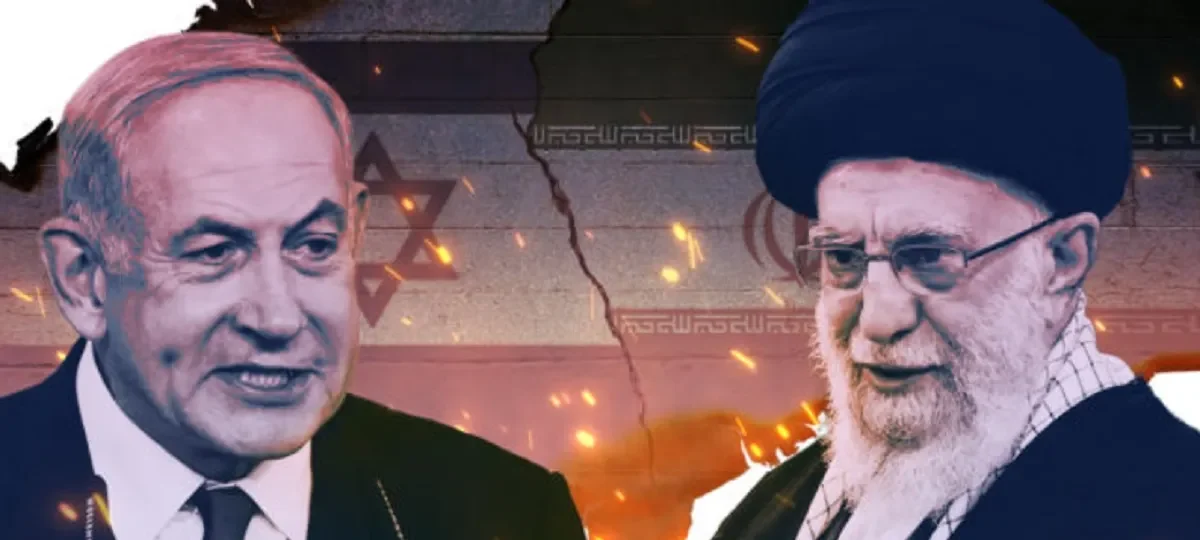
Operation Epic Fury and the Dawn of Direct Confrontation: The 2026 Iran War and the Collapse of Strategic Deterrence in the Middle East
Effina Driss, PhD
Independent Researcher in Geostrategy and Middle Eastern Affairs, Rabat, Morocco
ABSTRACT
On February 28, 2026, the United States and Israel launched a coordinated surprise military campaign against Iran — Operation Epic Fury and Operation Roaring Lion — initiating the first direct interstate war between the Western alliance and the Islamic Republic. Within hours, Supreme Leader Ali Khamenei was killed, Iran retaliated with an unprecedented wave of ballistic missiles and drones across the Middle East, and the Strait of Hormuz — through which approximately 20 percent of global oil transits — was effectively closed. This article analyzes the 2026 Iran war as a transformative geostrategic rupture, examining three interlocking dimensions: the collapse of the pre-war deterrence architecture; the operational logic and strategic consequences of the joint US-Israeli campaign; and the systemic regional and global effects of the conflict, including the weaponization of energy chokepoints, the fracturing of Gulf security structures, and the acceleration of multipolarity. Drawing on real-time reporting from CENTCOM, the Human Rights Activists in Iran (HRANA), United Nations agencies, and open-source intelligence, we argue that the 2026 war represents not merely an escalatory episode but a structural discontinuity in the Middle Eastern security order — one whose consequences will unfold over decades regardless of how the immediate military campaign concludes.
Keywords: Iran war 2026; Operation Epic Fury; Operation Roaring Lion; Strait of Hormuz; deterrence failure; US–Iran conflict; Middle East security architecture; nuclear proliferation; energy geopolitics; multipolarity.
I. INTRODUCTION: A NEW AGE OF DIRECT CONFRONTATION
The history of US-Iranian relations since 1979 is largely a history of managed hostility — a carefully calibrated adversarial relationship in which both sides maintained the fiction of non-escalation even as they fought proxy wars, conducted covert operations, and exchanged increasingly lethal blows across the region’s grey zones. That architecture of managed confrontation collapsed on February 28, 2026. Within the span of twelve hours, the United States and Israel struck hundreds of targets across Iran, killing Supreme Leader Ali Khamenei, eliminating dozens of senior military commanders, and dismantling significant portions of the Islamic Revolutionary Guard Corps’ (IRGC) command infrastructure. Iran responded with a barrage of over 500 ballistic missiles and nearly 2,000 drones targeting Israel, US military bases across the region, and, for the first time in history, all six Gulf Cooperation Council (GCC) member states simultaneously.
This article proceeds from the conviction that the 2026 Iran war cannot be adequately analyzed through the conceptual lenses developed for the previous half-century of US-Iranian competition. The conflict is not a reprise of the 1980s tanker wars, nor a scaled-up version of the shadow war of targeted assassinations and sabotage operations that characterized the 2010s and early 2020s. It is something qualitatively new: a direct, declared, high-intensity interstate war between the world’s preeminent military power, its most capable regional ally, and a nation-state possessing an advanced ballistic missile arsenal, a sophisticated drone force, and a network of proxy groups spanning the entire Middle Eastern arc from Lebanon to Yemen.
We organize our analysis around three interlocking theses. First, the war represents the terminal failure of a deterrence architecture that had been eroding since the US withdrawal from the Joint Comprehensive Plan of Action (JCPOA) in 2018. Second, the operational conduct of the campaign — combining leadership decapitation, infrastructure destruction, and the deliberate targeting of Iran’s maritime denial capabilities — reflects a strategic logic that prioritizes regime destabilization over military attrition, with profound and unpredictable second-order effects. Third, the weaponization of the Strait of Hormuz as an instrument of economic coercion has introduced a dimension of global systemic risk — a potential 8-million-barrel-per-day supply shock — that transforms this from a regional conflict into a global one, implicating powers from Beijing to Brussels in ways that no party fully anticipated.
The article proceeds as follows. Section II reconstructs the pre-war deterrence architecture and identifies the structural conditions for its failure. Section III provides an operational analysis of the first seventeen days of the campaign. Section IV examines the humanitarian and legal dimensions. Section V analyzes the regional spillover effects. Section VI addresses the global economic and energy consequences. Section VII assesses strategic scenarios for the conflict’s resolution. Section VIII concludes.
II. THE COLLAPSE OF DETERRENCE: STRUCTURAL CONDITIONS AND PROXIMATE CAUSES
2.1 The Erosion of the JCPOA Framework and the Nuclear Threshold
The Joint Comprehensive Plan of Action, concluded in 2015, represented the most sophisticated attempt in the post-Cold War era to manage a would-be nuclear power through a combination of economic incentives, verification mechanisms, and graduated sanctions relief. Its collapse following the Trump administration’s unilateral withdrawal in May 2018 set in motion a progressive Iranian breakout toward nuclear threshold status. By early 2026, Iran had accumulated approximately 460 kilograms of uranium enriched to 60 percent — a stockpile that, as US Middle East envoy Steve Witkoff publicly noted, was sufficient to produce eleven nuclear devices if further enriched to weapons grade.¹
From a deterrence theory perspective, the nuclear threshold dynamic fundamentally altered the strategic calculus of both Israel and the United States. Classical deterrence theory holds that uncertainty about an adversary’s capabilities generates caution; here, however, growing certainty that Iran was approaching — but had not yet crossed — the weapons threshold created what strategists have termed the ‘window of opportunity’ logic: the imperative to act before the adversary acquires the ultimate equalizer that would render military options prohibitively costly. This compellence dynamic, rather than pure deterrence, drove the timing of the February 28 operation.
2.2 The Sabotaged Diplomatic Track
What distinguishes the 2026 war from earlier escalatory episodes in US-Iranian relations is the proximity of its launch to what appeared to be a credible diplomatic breakthrough. On February 25, 2026, Iranian Foreign Minister Abbas Araghchi described a nuclear agreement as ‘within reach,’ characterizing it as a ‘historic opportunity’ to avert military conflict. On February 27 — one day before the strikes — Oman’s Foreign Minister Badr Al-Busaidi, who had been serving as mediator, announced that Iran had agreed both to never stockpile enriched uranium and to full verification by the International Atomic Energy Agency.² The talks were scheduled to resume on March 2.
The decision to strike despite this diplomatic momentum has been attributed to multiple intersecting factors. According to reporting by The Washington Post, Saudi Crown Prince Mohammed bin Salman made multiple phone calls to President Trump urging military action, and the decision came following sustained lobbying by both Riyadh and Jerusalem.³ Israeli Prime Minister Netanyahu, described as ‘increasingly alarmed’ that negotiations might succeed, met with Trump on February 10 to push for military action — a meeting whose timing suggests that the diplomatic track was perceived in Jerusalem not as an alternative to war but as an obstacle to it. The decision to proceed confirmed, as Al-Busaidi subsequently stated, that ‘active and serious negotiations had been undermined.’
2.3 Domestic Iranian Politics and the Protest Massacres
The immediate trigger for US rhetorical escalation was the Iranian regime’s violent suppression of nationwide anti-government protests that erupted in late December 2025, driven by the collapse of the rial and generalized economic crisis. The repression was catastrophic in scale: HRANA’s verified death count by January 28 stood at nearly 6,000 confirmed protesters killed, with total estimated casualties — including those under investigation — exceeding 20,000. On January 17, The Sunday Times reported between 16,500 and 18,000 killed; the UN Special Rapporteur on Human Rights in Iran warned the figure might surpass 20,000.⁴ Supreme Leader Khamenei personally ordered security forces to ‘crush the protests by any means necessary.’ On February 27, President Trump stated publicly that Iran had ‘killed at least 32,000 protesters.’
These domestic massacres provided the political legitimacy framework for US intervention — recasting what was fundamentally a preventive strike against nuclear and military capabilities as a humanitarian and pro-democracy intervention. This framing, regardless of its accuracy, significantly shaped the international reception of the campaign and partially insulated the Biden and Trump administrations from the full force of international legal criticism.
III. OPERATIONAL ANALYSIS: THE FIRST SEVENTEEN DAYS
3.1 The Opening Salvo: Leadership Decapitation and Infrastructure Targeting
The February 28 strikes constituted one of the most operationally ambitious opening campaigns in the history of aerial warfare. US and Israeli forces executed approximately 900 strikes in twelve hours, targeting a carefully sequenced set of objectives: Iran’s air defense systems (to establish air superiority), its ballistic missile production and storage facilities (to degrade retaliatory capacity), its nuclear infrastructure, IRGC command centers, and — in a decision of extraordinary strategic audacity — the leadership itself.⁵ The killing of Ali Khamenei in the opening hours of the campaign was a decapitation strike of historical significance. No comparable operation had been successfully executed against a major state actor since the Second World War.
By March 10, US Central Command confirmed that more than 6,000 sites had been struck in Iran across the first eleven days of the campaign. The naval dimension of the operation was equally decisive in its initial phase: 17 Iranian warships were destroyed, including one submarine, effectively eliminating Iran’s surface naval presence from the Arabian Gulf, the Strait of Hormuz, and the Gulf of Oman within the first 72 hours. CENTCOM Commander Admiral Brad Cooper confirmed: ‘There is not a single Iranian ship underway in the Arabian Gulf, Strait of Hormuz, or Gulf of Oman.’⁶
3.2 Iranian Retaliation: The Doctrine of Reciprocal Escalation
Iran’s operational response demonstrated both the depth of its pre-war preparations for this contingency and the limitations of its actual retaliatory capacity. By March 5, Iranian sources reported the launch of over 500 ballistic and naval missiles and nearly 2,000 drones since the war’s opening, with approximately 40 percent directed at Israeli territory and 60 percent at US military installations across the region.⁷ The IRGC claimed attacks against at least 27 US bases. The missile rate declined from the war’s opening days, with analysts attributing this to a combination of stock depletion and a deliberate rationing strategy for a potentially prolonged campaign.
The attack on the Israeli city of Beit Shemesh on March 1 — killing nine people and wounding more than twenty — demonstrated Iran’s ability to cause meaningful casualties in Israel despite US and Israeli air defense systems. Cluster munitions struck Tel Aviv streets on March 15. The simultaneous targeting of all six GCC states — Bahrain, Kuwait, Oman, Qatar, Saudi Arabia, and the UAE — represented a deliberate signaling strategy: Iran was demonstrating that the geographic cost of the coalition’s military action would be borne by the entire Gulf region, not merely by the direct belligerents.
3.3 The Command Decapitation Problem
The killing of Khamenei triggered an immediate constitutional and political crisis. An Interim Leadership Council was established on March 1 under the Iranian constitution. Within eight days — an extraordinarily compressed timeline — Mojtaba Khamenei, the late supreme leader’s son, was elected as his successor on March 8.⁸ US Secretary of Defense Pete Hegseth subsequently stated that he believed the new supreme leader was ‘wounded and likely disfigured.’ A $10 million State Department reward was offered for information about Khamenei and other senior officials, suggesting that the US campaign’s leadership elimination objectives remained operationally active. Whether the rapid succession succeeded in maintaining regime cohesion — or whether it exposed structural vulnerabilities that could accelerate collapse — remained one of the central strategic uncertainties of the conflict’s third week.
IV. HUMANITARIAN AND LEGAL DIMENSIONS
4.1 Civilian Casualties and Protected Sites
The humanitarian record of the first seventeen days reflects the inherent tension between the campaign’s stated precision targeting objectives and its actual impact on civilian populations. HRANA’s independent tracking — operating under severe constraints imposed by Iran’s renewed internet blackout — recorded at least 1,351 civilian deaths including 207 children by March 16. The Iran Ministry of Health’s official figure of 1,444 killed and 18,551 wounded represents, by the agency’s own metrics, a conservative minimum.⁹ The Iranian Red Crescent Society reported that over 6,668 civilian units had been targeted by US-Israeli strikes by March 7.
Several incidents generated particular international concern. The February 28 strike on the Shajareh Tayyebeh girls’ elementary school in Minab — adjacent to a naval base — killed approximately 170 people. The US denied responsibility; imagery subsequently attributed the strike to American forces. The March 2 strike on Arg Square in Tehran damaged the nearby Golestan Palace, a UNESCO World Heritage Site, prompting a statement of concern from the organization. The March 5 bombing of the Azadi Sport Complex raised additional questions about targeting standards.
4.2 The Legal Framework and Its Contestation
The legal status of the 2026 Iran war has been contested from its first hours. The International Commission of Jurists characterized the strikes as a violation of international law. Former US special envoy Robert Malley stated that the operation had ‘neither legality nor urgency,’ adding that ‘Iran did not present a danger to the United States.’ Several UN member states condemned the attacks as violations of Iranian sovereignty and the UN Charter.
The United States and Israel have grounded their legal justification in a combination of preemptive self-defense under Article 51 of the UN Charter (invoking the imminent nuclear threat), and the humanitarian intervention doctrine (invoking the massacre of protesters). Neither justification has secured broad international acceptance. The UN Security Council was, predictably, unable to adopt binding measures given US veto capacity. The General Assembly emergency session, however, provided a forum for the overwhelming majority of member states to register their opposition to the military action.
V. REGIONAL SPILLOVER: THE ARCHITECTURE OF INSTABILITY
5.1 Lebanon, the Hezbollah Dimension, and the Northern Front
Hezbollah’s entry into the conflict on March 2 — triggered by the death of Khamenei, whom the organization’s leadership had pledged to avenge — added a second active front to Israel’s strategic burden. Israeli Defense Minister Israel Katz announced ground operations in southern Lebanon, with ‘hundreds of thousands’ of residents evacuated from the area. Israeli air raids and artillery fire struck multiple Lebanese towns; the Lebanese Ministry of Health recorded at least 486 deaths in the first two weeks of Israeli operations.¹⁰ The simultaneous prosecution of major military campaigns in both Gaza (still ongoing), Lebanon, and the Iran theater represents an unprecedented operational stress test for the Israeli Defense Forces, raising serious questions about sustainability, logistics, and the risk of strategic overextension.
5.2 Iraq: The Squeezed Middle
Iraq finds itself in the most uncomfortable position of any regional state: host to approximately 2,500 US troops, home to powerful Iran-backed militia coalitions within the Popular Mobilization Forces (PMF), and formally committed to sovereignty while lacking the capacity to enforce it. The Islamic Resistance in Iraq claimed 67 drone and missile attacks within the war’s first three days. US and Israeli coalition strikes targeted key PMF sites in the Jurf al-Sakhar area. At least 29 people were killed in Iraq in the conflict’s first two weeks. The IRGC ordered the evacuation of the Kurdish city of Mariwan, suggesting preparations for possible ground operations in the Iran-Iraq border region — a development that could draw the Iraqi state into a conflict it has no institutional capacity to manage.
5.3 The Gulf States: Between Patron and Aggressor
The GCC states occupy a structurally untenable position in the conflict’s political economy. Saudi Arabia and the UAE have been identified as having actively lobbied the Trump administration to launch the strikes; both states host major US military installations; and both are highly exposed to Iranian retaliation. Yet their populations and, in some cases, their official postures, reflect deep discomfort with a war that is destroying a Muslim-majority state and generating massive civilian casualties. Saudi Arabia’s Ministry of Defense confirmed the interception of six ballistic missiles and four drones in Riyadh-area airspace. UAE energy infrastructure was struck; smoke was seen rising from the Fujairah area. The simultaneous economic exposure — from the Strait of Hormuz closure and attacks on their own energy facilities — creates a profound tension between their security alignment with the US and their immediate material interests.
VI. GLOBAL ECONOMIC CONSEQUENCES: THE HORMUZ CHOKEPOINT AS SYSTEMIC WEAPON
6.1 The Energy Shock
The Strait of Hormuz — through which approximately 20 percent of globally traded crude oil, 30 percent of global seaborne crude oil and petroleum products, and significant volumes of liquefied natural gas normally transit — has been effectively closed since March 4, 2026. The International Energy Agency estimated that the conflict cut global oil supply by approximately 8 million barrels per day in March.¹¹ Brent crude surged from approximately $70 per barrel before the conflict to a peak of nearly $120 per barrel within the first week, before settling at approximately $105 per barrel by March 16. US gasoline prices rose nearly 80 cents per gallon in seventeen days. Qatar declared force majeure on all gas contracts on March 4; Kuwait followed on March 7.
The IEA coordinated the release of 400 million barrels from member states’ strategic petroleum reserves — the largest such release in the organization’s history. Alternative routing through Saudi Arabia’s East-West Pipeline and the UAE’s Fujairah pipeline offered partial mitigation, but their combined capacity faces a deficit of approximately 12 million barrels per day against normal Strait throughput. The Red Sea alternative route, moreover, remains vulnerable to potential Houthi interdiction operations.
6.2 Differential Exposure and the Multipolarity Accelerant
The geographic distribution of exposure to the Hormuz closure maps almost precisely onto the contours of existing great-power competition. Asia — whose economies account for approximately 84 percent of crude oil transiting the strait — bears the most acute vulnerability. China, India, Japan, and South Korea together account for 69 percent of all crude oil flows through the Strait.¹² Vietnam’s strategic petroleum reserves are estimated to cover fewer than 20 days; Pakistan and Indonesia approximately 20 days. The Philippines, Thailand, Malaysia, and Brunei import between 60 and 95 percent of their crude oil needs from the Middle East.
China’s structural position is revealing. Having pre-positioned large crude stockpiles before the conflict and benefiting from both pipeline imports from Russia and preferential access to Iranian supply (with Iran reportedly permitting Chinese-flagged vessels to transit the Strait), China faces a significantly less acute immediate exposure than its regional competitors. Iran is also reportedly weighing allowing cargoes traded in Chinese yuan to transit Hormuz — a development that would simultaneously deepen the Sino-Iranian alignment and accelerate the erosion of dollar dominance in global energy markets. The war is, in this dimension, functioning as a structural accelerant of multipolarity: distributing economic pain asymmetrically in ways that advantage China relative to the US-aligned system.
6.3 The Global Food Security Dimension
A less immediately visible but potentially more durable consequence of the Hormuz closure is its impact on global food security. The UN World Food Programme and economic analysts have warned of significant long-term increases in global food prices as a direct result of the conflict. The Fertilizer Institute has estimated that nearly 50 percent of global urea and sulfur exports, as well as 20 percent of global LNG — a key feedstock for nitrogen fertilizers — transit through the Strait of Hormuz. Disruptions to fertilizer supply chains, if sustained over weeks or months, would generate harvest shortfalls in the 2026–2027 agricultural cycle that could exacerbate food insecurity in import-dependent economies across Africa, South Asia, and Southeast Asia.¹³
VII. STRATEGIC SCENARIOS AND THE QUESTION OF TERMINATION
7.1 The Short-War Scenario and Its Limitations
The Trump administration and Israeli military officials have consistently projected a short war — weeks, not months. Trump stated on March 1 that the campaign’s objectives could be achieved within four weeks; Israeli military sources told CNN that the campaign would require at least three more weeks of strikes on ‘thousands’ of additional targets. The short-war assumption rests on the premise that accumulated military pressure will generate either regime capitulation, regime collapse, or a negotiated capitulation on nuclear and missile terms acceptable to Washington and Jerusalem.
This scenario faces several structural complications. First, the rapid installation of Mojtaba Khamenei as supreme leader suggests that the regime’s institutional machinery has greater continuity than the decapitation strategy anticipated. Second, Iran’s demonstrated willingness to impose symmetric economic costs — through the Hormuz closure — gives it a coercive instrument that generates global pressure for conflict termination that may constrain American operational freedom more than anticipated. Third, the experience of previous US military interventions suggests that the distance between declared objectives — regime change, nuclear disarmament, behavioral transformation — and achievable military outcomes tends to expand, not contract, under operational pressure.
7.2 The Prolonged Campaign and Escalation Risks
The alternative scenario — a conflict that extends beyond the administration’s projected timeline — carries escalation risks of a qualitatively different order. Iran’s foreign minister has stated that Tehran ‘has no hesitation in defending itself and is prepared to continue the war for as long and as far as necessary.’ If the regime survives the immediate campaign with sufficient institutional coherence, the incentive to accelerate covert nuclear development — under the cover of conflict, with IAEA monitoring already suspended — becomes overwhelming. A post-war Iran that has absorbed massive military damage but retained its nuclear ambitions, and which has definitively concluded that diplomatic engagement with the United States is structurally impossible, would represent a more dangerous strategic actor than the pre-war Islamic Republic.
7.3 Toward a Negotiated Outcome
The most strategically rational termination path — though currently the most politically difficult — involves a negotiated framework that addresses the war’s three nominal causes: Iran’s nuclear program, its ballistic missile capabilities, and the Hormuz closure. Iran’s foreign minister has indicated openness to negotiations and explicitly stated that Tehran is prepared to discuss strait access with countries seeking safe passage. Trump has acknowledged that Iran ‘wants to make a deal,’ while maintaining that ‘the terms aren’t good enough yet.’
The diplomatic architecture for such an agreement exists — the Oman channel remains active, and the February 26 Geneva talks demonstrated that technical progress was achievable. The central challenge is political: any deal must be perceived by both domestic constituencies and regional allies as representing the achievement of war objectives commensurate with the costs incurred. For the US and Israel, this minimally requires verifiable nuclear disarmament and constraints on Iran’s ballistic missile program. For Iran, it requires some form of security guarantee and sanctions relief that permits regime survival and economic stabilization. Whether these requirements are simultaneously satisfiable remains the central uncertainty of the conflict’s diplomatic horizon.
VIII. CONCLUSION
The 2026 Iran war represents a watershed moment in the history of Middle Eastern geopolitics and in the broader trajectory of the post-Cold War international order. It has demonstrated, with brutal clarity, the limits of the managed-adversarial relationship as a mode of conflict resolution; the fragility of diplomatic progress in the face of domestic political pressures and allied lobbying; and the extraordinary systemic risks attendant upon the direct military confrontation of major powers in energy-critical geography.
The theoretical implications are substantial. Classical deterrence theory’s assumption of rational, unitary actors maximizing security under uncertainty has been severely tested by a conflict in which diplomatic breakthroughs were sabotaged by allied pressure, where the prospect of a negotiated solution was perceived as more threatening than war, and where the escalatory ladder has been climbed with a speed that leaves little room for the graduated signaling on which deterrence stability depends.
For scholars of international relations, the 2026 conflict offers a case study in the interaction between nuclear threshold dynamics, domestic political pressures, alliance management, and strategic escalation that will repay intensive analysis for years to come. For policymakers, it offers a sobering reminder of the chasm between the precision of military planning and the chaos of strategic consequences — a chasm that, in the Hormuz chokepoint, has become visible to every economy on earth.
Whatever its ultimate outcome, the 2026 Iran war has already permanently altered the strategic landscape of the Middle East. The era in which the United States and Iran conducted their competition through proxies, covert operations, and calibrated escalation has ended. The era that has replaced it is one in which the full destructive force of direct interstate warfare has been unleashed in the world’s most energy-critical region — with consequences that will unfold over decades.
NOTES
1 Steve Witkoff cited in multiple press reports, February–March 2026; IAEA, ‘Verification and Monitoring in the Islamic Republic of Iran,’ NPT/CPJM/2026/01, February 2026.
2 Badr Al-Busaidi, statement to media, February 27, 2026, cited in Reuters and AP wire reports. Araghchi quoted in AFP, February 25, 2026.
3 Greg Jaffe and Karen DeYoung, ‘Saudi Prince Lobbied Trump Repeatedly for Iran Strike,’ The Washington Post, March 5, 2026.
4 HRANA, ‘Crimson Winter Report: Fifty Days of Protest Killings in Iran,’ February 23, 2026; UN Special Rapporteur on the Situation of Human Rights in Iran, Statement, January 22, 2026.
5 Encyclopaedia Britannica, ‘2026 Iran War,’ March 2026 edition; US CENTCOM, public statements, February 28–March 10, 2026.
6 Admiral Brad Cooper, CENTCOM Commander, press briefing, March 3, 2026, cited in US Department of Defense transcript.
7 Fars News Agency, citing Iranian military source, March 5, 2026; Al Jazeera, ‘Iran War: Death Toll and Injuries Live Tracker,’ March 16, 2026.
8 Reuters, ‘Iran Names Mojtaba Khamenei as New Supreme Leader,’ March 8, 2026; Iranian state media, IRNA, March 8, 2026.
9 HRANA, ‘Day 17 of the U.S.-Israeli War on Iran: Increase in Civilian Casualties,’ March 16, 2026; Iran Ministry of Health statement, March 14, 2026.
10 Lebanon Ministry of Public Health, cumulative mortality report, March 14, 2026; Al Jazeera, ‘Israel Steps Up Campaign in Lebanon,’ March 16, 2026.
11 International Energy Agency, ‘Oil Market Report,’ March 13, 2026; NPR, ‘Iran War Cost and Casualties,’ March 14, 2026.
12 Kpler, ‘US-Iran Conflict: Strait of Hormuz Crisis Reshapes Global Oil Markets,’ March 1, 2026; US Energy Information Administration data cited in Congressional Research Service, R45281, March 2026.
13 The Fertilizer Institute, statement on Hormuz LNG and fertilizer transit disruption, March 9, 2026; UN World Food Programme, ‘Iran Conflict Food Security Impact Assessment,’ March 12, 2026.
REFERENCES
ACLED. ‘Middle East Special Issue: March 2026.’ Armed Conflict Location and Event Data Project, March 2026.
Al-Busaidi, Badr. Statement on Iran nuclear negotiations. Muscat, February 27, 2026. Cited in Reuters and Associated Press.
Araghchi, Abbas. Statement on nuclear diplomacy. Tehran, February 25, 2026. Cited in AFP and Al Jazeera.
Arreguín-Toft, Ivan. How the Weak Win Wars: A Theory of Asymmetric Conflict. Cambridge: Cambridge University Press, 2005.
Brodie, Bernard. Strategy in the Missile Age. Princeton: Princeton University Press, 1959.
Congressional Research Service. ‘Iran Conflict and the Strait of Hormuz: Impacts on Oil, Gas, and Other Commodities.’ Report R45281. Washington, DC: Library of Congress, March 2026.
Encyclopaedia Britannica. ‘2026 Iran War.’ Updated March 2026.
Human Rights Activists in Iran (HRANA). ‘Crimson Winter: Fifty Days of Protest Killings in Iran.’ February 23, 2026.
Human Rights Activists in Iran (HRANA). ‘Day 17 of the U.S.-Israeli War on Iran.’ March 16, 2026.
International Energy Agency. ‘Oil Market Report.’ March 13, 2026.
Iran Ministry of Health. Cumulative casualty statements. February 28–March 16, 2026.
Kpler. ‘US-Iran Conflict: Strait of Hormuz Crisis Reshapes Global Oil Markets.’ March 1, 2026.
Larison, Daniel. ‘The Costs of Preventive War Against Iran.’ American Conservative, March 2026.
Mearsheimer, John J. The Tragedy of Great Power Politics. Updated edition. New York: W.W. Norton, 2014.
NPR. ‘These Are the Casualties and Cost of the War in Iran Two Weeks Into the Conflict.’ March 14, 2026.
Schelling, Thomas C. Arms and Influence. New Haven: Yale University Press, 1966.
Time Magazine. ‘What We Know About the U.S. Service Members Killed in the Iran War.’ March 10, 2026.
Time Magazine. ‘How the War With Iran Is Impacting Economies in Asia.’ March 16, 2026.
US Central Command (CENTCOM). Public statements and press briefings, February 28–March 16, 2026.
UN Special Rapporteur on the Situation of Human Rights in the Islamic Republic of Iran. Statement on protest killings. January 22, 2026.
UN World Food Programme. ‘Iran Conflict Food Security Impact Assessment.’ March 12, 2026.
Wikipedia. ‘2026 Iran War.’ Last modified March 17, 2026.
Wikipedia. ‘Economic Impact of the 2026 Iran War.’ Last modified March 16, 2026.
Wikipedia. ‘2026 Strait of Hormuz Crisis.’ Last modified March 17, 2026.
Wikipedia. ‘Twelve-Day War.’ Last modified March 17, 2026.
