
China’s Calculated Silence

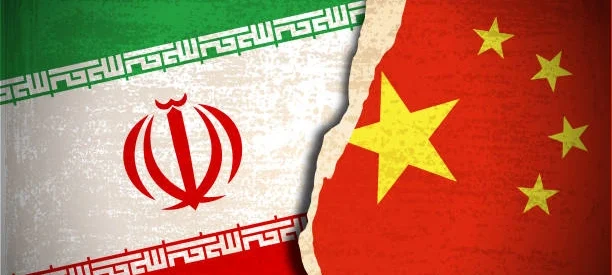
How Beijing Is Winning the Wars It Is Not Fighting
Driss EFFINA, PhD
Reading time: 13 minutes
Introduction: The Art of Strategic Restraint
In the wars of 2022-2026, China has not fired a single shot. It has not imposed a single sanction. It has not deployed a single soldier beyond its borders. Yet in the assessment of most serious strategic analysts, China is the country that has benefited most from the conflicts tearing apart the international order — the country best positioned to inherit the influence that the United States, Russia, and Europe are collectively burning through.
This is not accidental. It is the product of a deliberate, sophisticated, and patient strategic doctrine — one that Sun Tzu would recognize immediately: win without fighting, profit from others’ exhaustion, position for the decisive moment without revealing your hand.
I. Ukraine: Watching the West Bleed
1.1 The ‘no limits’ partnership — and its limits
When Putin and Xi announced their ‘no limits’ partnership days before the Ukraine invasion, Western analysts feared the worst: Chinese military and economic support that would make Western sanctions ineffective and Russian defeat impossible. The reality has been more nuanced — and more strategically sophisticated.
China has not provided lethal weapons to Russia. It has maintained formal compliance with sanctions on the most sensitive dual-use technology categories. It has not provided the direct economic lifeline that would make Russia unambiguously dependent on Beijing. Instead, China has provided precisely calibrated support: enough to keep Russia functional and in the fight, not enough to make China complicit in Russia’s war crimes, and structured to maximize Chinese leverage over Moscow rather than Russian capacity against Ukraine.
1.2 Buying cheap: the resource dividend
The most concrete Chinese gain from the Ukraine war has been economic. China has purchased Russian oil and gas at discounts of 25-40% below market price — effectively subsidizing its industrial economy on the back of Russia’s desperation. Chinese companies have moved into Russian markets vacated by Western firms. Chinese banks have become the primary financial infrastructure for Russian international transactions.
The result is a Russia that is progressively more dependent on China — economically, technologically, and diplomatically — than at any point in their modern relationship. The ‘junior partner’ dynamic that Moscow has always resisted has been institutionalized by the economic consequences of the war. Putin’s ‘no limits’ partnership has, from Beijing’s perspective, produced something rather different: a Russia that needs China more than China needs Russia.
II. Taiwan: Reading the Ukraine Lessons
2.1 What China learned — and didn’t learn
Western analysts have debated extensively whether Russia’s difficulties in Ukraine have deterred or emboldened Beijing regarding Taiwan. The answer is probably both, in different domains. The Ukrainian military’s performance has demonstrated that a motivated, well-armed defender can impose enormous costs on a numerically superior invader — a lesson that should give PLA planners pause regarding any Taiwan operation.
But China has also observed what Ukraine revealed about Western resolve and Western military-industrial capacity. The inability of the U.S. defense industry to sustain ammunition production at wartime rates. The fragility of European political consensus under economic pressure. The limits of sanctions as a coercive instrument against a large economy with alternative trade partners. Each of these observations informs Beijing’s Taiwan calculus.
2.2 The 2027 question
Xi Jinping has reportedly set 2027 — the PLA’s centenary — as a target date by which China should have the military capacity to seize Taiwan. Whether this represents a firm operational timeline or an aspirational capability benchmark is debated. What is not debated is that China has been accelerating military modernization, naval expansion, and the development of gray zone coercion tools that fall below the threshold of armed conflict.
The Taiwan question in 2026 is not whether China will act — it is whether the deterrence equation will hold until the military balance shifts decisively enough that Beijing believes the cost-benefit calculation favors action. American commitment uncertainty — fed by Trump’s transactional approach to alliances — is the most significant variable degrading that deterrence.
III. The Global South: Where China Is Actually Winning
3.1 The infrastructure strategy matures
While Western attention has been absorbed by Ukraine and Gaza, China has been quietly consolidating its position in the Global South through the most patient and comprehensive infrastructure investment strategy in history. Belt and Road Initiative projects — despite much Western criticism — have delivered roads, ports, railways, and energy infrastructure to countries that could not otherwise afford them.
The geopolitical dividend of this investment is now maturing. At the United Nations, Global South countries have systematically refused to support Western positions on Ukraine, Gaza, and China’s own human rights record. Not out of ideological alignment with Beijing, but out of a rational calculation: China offers tangible economic benefits without political conditions, while the Western order demands alignment without delivering equivalent material gains.
3.2 The dollar’s slow erosion
Perhaps the most consequential long-term Chinese strategic achievement is the quiet acceleration of dollar-alternatives in international trade. The Shanghai Cooperation Organisation, BRICS expansion, bilateral currency swap agreements, and the petroyuan — none of these individually threatens dollar dominance. Collectively, they are building the infrastructure for a world in which the dollar’s reserve currency status can be challenged.
This does not happen in a year or a decade. It happens in a generation. And China is playing a generational game while Washington debates its next election cycle.
Conclusion: The Patient Power
China in 2026 is not winning because it is powerful. It is winning because it is patient. While the United States exhausts its credibility in failed military adventures and domestic polarization, while Russia destroys itself in Ukraine, while Europe rediscovers its strategic vulnerability — China is compounding. Building capacity, buying resources, extending influence, and waiting for the moment when the correlation of forces produces an outcome that no war could have delivered.
For the deepest analytical portrait of how China’s rise is reshaping global economic and technological competition, the book
Musk: The Corporate State and
The Tariff Gamble — both available at globalstrategyfiles.com — provide essential frameworks for understanding the U.S.-China rivalry that will define the 21st century.
