
A War of Necessity or a War of Choice?

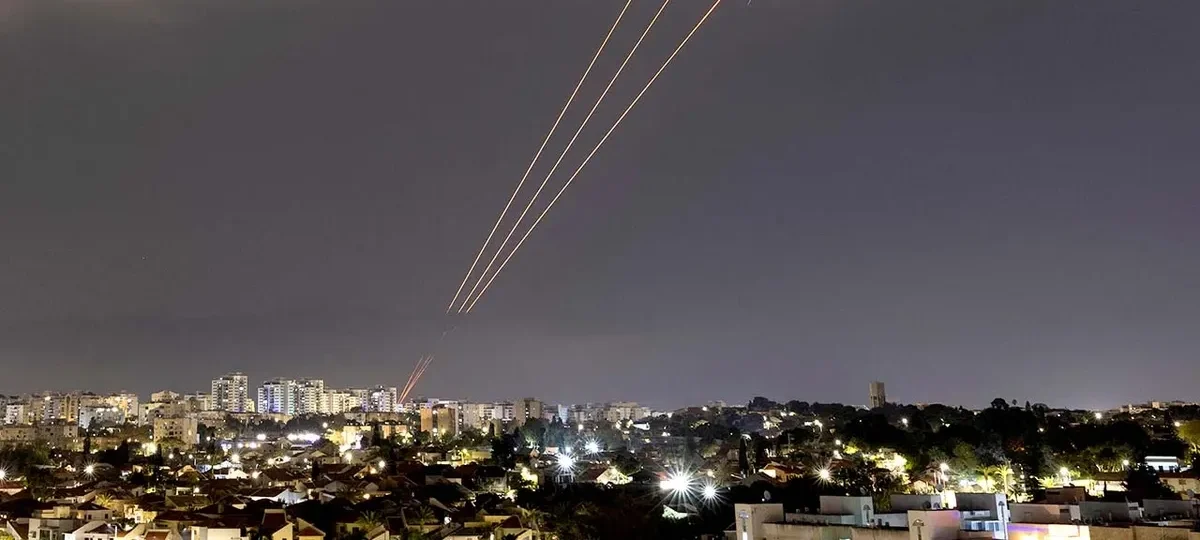
A War of Necessity or a War of Choice? Interrogating the Strategic, Legal, and Moral Foundations of the 2026 Conflict Against Iran
Effina Driss, PhD
Geopolitical Economist — US-China Rivalry, Power, Trade & Strategic Dominance, Rabat, Morocco
ABSTRACT
On February 28, 2026, the United States and Israel launched Operation Epic Fury and Operation Roaring Lion against the Islamic Republic of Iran, killing Supreme Leader Ali Khamenei and initiating the first direct interstate war between the Western alliance and Tehran since the Islamic Revolution of 1979. The Trump administration offered multiple, often contradictory justifications for the strikes — nuclear preemption, humanitarian intervention, regime change, missile degradation, and self-defense — a multiplicity of rationales that itself raises fundamental questions about the war’s strategic coherence. This article subjects each of these justifications to rigorous strategic, legal, and empirical scrutiny, drawing on open-source intelligence, international legal frameworks, nonproliferation scholarship, and the comparative study of preventive war. We argue that while credible strategic concerns about Iran’s nuclear trajectory existed before the war, the decision to strike on February 28 was made at a moment when diplomacy had produced a verifiable breakthrough, when Iran’s military posture had been significantly degraded by the June 2025 Twelve-Day War, and when the specific threat calculus did not meet the legal or strategic thresholds required to justify preventive military action. The war against Iran, we conclude, presents as a war of strategic opportunity masquerading as a war of necessity — a diagnosis that has profound implications for the war’s conduct, its prospects for resolution, and its long-term impact on international order.
Keywords: Iran war 2026; just war theory; preventive war; nuclear preemption; Operation Epic Fury; international humanitarian law; strategic justification; US foreign policy; nonproliferation; war of choice.
I. INTRODUCTION: THE QUESTION THE WAR DEMANDS
Wars demand justification. This is not merely a philosophical observation; it is an empirical regularity of modern international politics. States that initiate armed conflict — particularly states that do so without clear provocation, without Security Council authorization, and in violation of active diplomatic processes — face the burden of articulating a rationale sufficiently compelling to sustain domestic support, retain allied cohesion, and resist international condemnation. The quality of that rationale matters not only morally but strategically: wars prosecuted on premises that are subsequently revealed as flawed, exaggerated, or dishonest generate political costs that constrain the ability to pursue war aims effectively and shape the peace that follows.
The 2026 war against Iran has produced precisely this kind of rationale crisis. Within the first four days of Operation Epic Fury, the Trump administration had offered at least six distinct justifications for the strikes: the imminence of an Iranian nuclear weapon; the threat posed by Iranian ballistic missiles capable of reaching the United States; the human rights crisis created by the January 2026 massacre of Iranian protesters; the need for preemptive self-defense against an anticipated Iranian attack on US assets; regime change as a precondition for regional stability; and the continuation of an already-existing armed conflict between Iran and the US-Israeli coalition. Senate Minority Leader Chuck Schumer captured the incoherence precisely: ‘The rationales change by the hour — regime change, nuclear weapons, missiles, defense, preemptive — which is it? When the justification keeps shifting, a strategy is missing.’¹
This article asks, with the analytical discipline that such a question demands: are there — were there, on February 28, 2026 — genuine, well-grounded strategic reasons that justified going to war against Iran? The question is not whether the Islamic Republic is a benign actor, which it is not. It is not whether Iran’s nuclear ambitions pose long-term proliferation risks, which they do. It is the more precise question of whether those concerns, evaluated against the full strategic context of February 2026, met the threshold required to justify a military campaign that has, within seventeen days, killed over 5,000 people, effectively closed the Strait of Hormuz, and generated a global energy shock of historic proportions.
The article proceeds as follows. Section II examines the nuclear justification. Section III evaluates the self-defense and preemption claims. Section IV addresses the humanitarian and regime-change rationales. Section V analyzes the strategic context — what was actually happening diplomatically and militarily in February 2026. Section VI applies just war theory. Section VII assesses the strategic costs relative to alternatives. Section VIII concludes with a verdict.
II. THE NUCLEAR JUSTIFICATION: REAL THREAT, WRONG MOMENT
2.1 The Genuine Proliferation Concern
The most substantive justification for the war — and the one that commands the most analytical respect — is the nonproliferation argument. Iran’s nuclear program has been a source of genuine international concern since the early 2000s, when evidence of undisclosed uranium enrichment activities at Natanz and a heavy water facility at Arak came to light. The 2015 Joint Comprehensive Plan of Action temporarily capped Iran’s enrichment activities and enabled robust IAEA verification. The US withdrawal from the JCPOA in 2018 set in motion a progressive Iranian breakout toward nuclear threshold status: by the time of the June 2025 Twelve-Day War, Iran had accumulated an estimated 970 pounds of uranium enriched to 60 percent purity — within days of producing weapons-grade material.² IAEA chief Rafael Grossi had warned that an Iranian nuclear weapon would trigger broad regional proliferation, potentially drawing Saudi Arabia, Turkey, Egypt, and the UAE into a cascade of weapons programs.
These concerns are real. A nuclear-armed Iran would represent a significant and arguably irreversible transformation of the Middle Eastern security landscape. The argument that military action was preferable to accepting Iranian nuclear threshold status has a coherent strategic logic, even if one ultimately rejects it. The question is not whether Iran’s nuclear program warranted serious concern but whether it warranted military action specifically on February 28, 2026.
2.2 The Evidence Problem: Was the Threat Imminent?
The nuclear preemption argument requires, as a minimum condition, that the threat be imminent — meaning that the window for non-military alternatives had closed and that the costs of inaction would be catastrophic and irreversible. The evidentiary record does not support this conclusion. Three critical facts undermine the imminence claim. First, the Defense Intelligence Agency had concluded in 2025 — on the basis of its own intelligence assessment — that it would be a decade before Iran could acquire the technical capability to produce a missile arsenal capable of reaching the United States. Second, the June 2025 Twelve-Day War had already set back Iran’s nuclear program by an estimated two years, according to the US Department of Defense’s own assessment. Third — and most damaging — the IAEA stated explicitly at the time of the strikes that it ‘did not have the access it needed to ensure that the Iranian nuclear program was exclusively peaceful, but that there was no evidence of a structured nuclear weapons program.’³
Multiple independent nuclear scientists and nonproliferation experts publicly contradicted the Trump administration’s specific claims about the Tehran Research Reactor — the facility cited as a central justification for the strikes. The Arms Control Association’s analysis was unambiguous: ‘It is unlikely that any outcome short of complete Iranian capitulation to U.S. demands at the negotiating table would have averted the strikes. By the time the third round of talks ended in Geneva, Trump had likely already made the decision to go to war.’⁴ The nuclear justification, in this light, functions not as the genuine driver of the decision but as its most publicly defensible post-hoc rationalization.
2.3 The Diplomatic Breakthrough That Was Abandoned
Perhaps the most powerful single piece of evidence against the nuclear justification as a good-faith rationale is the diplomatic timeline. On February 26, the third round of US-Iranian nuclear talks concluded in Geneva with an agreement to resume technical-level negotiations on March 2. On February 27 — thirty-six hours before the strikes — Oman’s Foreign Minister Badr Al-Busaidi announced publicly that Iran had agreed to never stockpile enriched uranium and to full IAEA verification, and that peace was ‘within reach.’ Iran’s Foreign Minister Araghchi had himself described a ‘historic opportunity’ and a ‘breakthrough.’ The talks were not stalled; they were producing results. They were cancelled not because they failed but because, according to the Arms Control Association’s detailed reconstruction, the decision to strike had already been made.⁵
A state that chooses war at the moment when diplomacy is succeeding cannot claim that it went to war because diplomacy had failed.
III. THE SELF-DEFENSE ARGUMENT: PREEMPTION, PREVENTION, OR AGGRESSION?
3.1 The Legal Architecture of Self-Defense
Article 51 of the United Nations Charter preserves the ‘inherent right of individual or collective self-defense if an armed attack occurs.’ Customary international law, as articulated in the Caroline doctrine of 1837 and its modern descendants, has extended this to include anticipatory self-defense when the threat is ‘instant, overwhelming, leaving no choice of means, and no moment of deliberation.’ Contemporary international law scholarship has further developed the concept of preemptive self-defense against imminent attacks. What it has not accepted — without Security Council authorization — is the broader doctrine of preventive war: military action taken not against an imminent specific attack but against a future capability that, if allowed to develop, might eventually pose a threat.
The Bush Doctrine of 2002, which explicitly claimed the right of preventive war, was widely rejected by international legal scholars and most states as inconsistent with the UN Charter framework. The 2026 Iran strikes face precisely the same legal problem. The Quincy Institute’s analysis was categorical: ‘In the absence of an imminent threat to the United States, the president has no legal authority to initiate the use of force without congressional approval. Iran poses no such threat to the country.’⁶ Professor Susan Akram of Boston University was equally direct: ‘The US-Israeli attacks on Iran cannot be legally justified under any theory of the laws of war.’⁷
3.2 The Congressional Authorization Vacuum
Beyond the question of international law, the war raised immediate constitutional objections under US domestic law. The War Powers Resolution of 1973 requires the president to notify Congress within 48 hours of committing US forces to hostilities and limits unauthorized military action to 60 days absent congressional authorization. Trump did not seek and did not receive congressional authorization before launching Operation Epic Fury. The constitutional dimension matters strategically, not merely procedurally: a war prosecuted without congressional authorization lacks the institutional durability required for sustained commitment to complex military objectives. As Brookings analysts noted, ‘Trump’s decision to go it alone in Iran without a vote or even debate in Congress creates both constitutional problems and political challenges.’⁸ Democratic opposition mobilized immediately; Senate Minority Leader Schumer described the war as ‘unconstitutional’ and Republicans faced pressure to invoke the War Powers Act.
3.3 The ‘Ongoing Armed Conflict’ Theory and Its Problems
The most sophisticated legal defense of the strikes, articulated by scholars at Duke Law School’s Lawfire blog, argued that the 2026 operation should be understood not as a new use of force but as a continuation of an existing armed conflict between the US-Israeli coalition and Iran — a conflict that, under this reading, had been ongoing since at least the October 2023 Hamas attack.⁹ This theory has a certain structural logic: if an armed conflict is already legally in existence, the law of war governs the conduct of that conflict without requiring fresh authorization for each use of force within it. However, this argument proves too much. If any state of ongoing hostility constitutes a ‘continuous armed conflict’ authorizing unrestricted escalation, the distinction between war and peace becomes meaningless. The US and Iran have been in a state of ‘hostility’ in the broad sense since 1979. The doctrine cannot reasonably be stretched to justify the assassination of a head of state and 900 strikes in 12 hours on the basis of proxy conflicts conducted through non-state intermediaries across different geographies and timescales.
IV. HUMANITARIAN INTERVENTION AND REGIME CHANGE: NOBLE ENDS, PROBLEMATIC MEANS
4.1 The Protest Massacre Rationale
The January 2026 massacre of Iranian protesters — in which between 7,000 and 32,000 people were killed by the security forces of a government that Khamenei had ordered to ‘crush the protests by any means necessary’ — provides the war’s most emotionally compelling humanitarian dimension. Trump stated publicly on February 27 that Iran had ‘killed at least 32,000 protesters.’ The moral repugnance of these killings is not in question. The question is whether they provide a legally and strategically coherent justification for the military campaign that followed.
The Responsibility to Protect (R2P) doctrine, adopted by the UN General Assembly in 2005, provides a framework under which the international community may intervene to prevent mass atrocities when a state manifestly fails to protect its own population. However, R2P explicitly requires Security Council authorization and is intended as a last resort after exhaustion of diplomatic and non-military measures. The February 28 strikes were not authorized by the Security Council; they were not preceded by exhaustion of non-military measures (given that the US had not even attempted multilateral diplomatic pressure on the protest issue); and they were not proportionate to the protection of Iranian civilians — the military campaign they initiated has itself generated massive civilian casualties in Iran and across the region.
4.2 Regime Change as a War Aim: The Iraq Precedent
Trump stated publicly that the aim of the attack was regime change in Tehran. This objective — the most maximalist of the war’s many stated rationales — raises the most acute strategic concerns. The historical precedent of the 2003 Iraq War, in which a similar combination of WMD claims, humanitarian concerns, and regime change objectives were invoked to justify preventive military action, has obvious and uncomfortable resonances. That conflict, which Trump had himself criticized during his first campaign, produced not the stable democratic transition its architects promised but a decade of insurgency, sectarian civil war, Iranian regional expansion, and the creation of ISIS.
The structural conditions in Iran are in important respects less favorable for a successful post-intervention transition than those in Iraq were in 2003. Iran has a larger population (90 million versus 25 million), a more complex ethnic and confessional landscape, a more deeply institutionalized security apparatus in the IRGC, and a more hostile regional environment — with Russia and China as strategic patrons whose interests are actively served by Iranian chaos. As Public Citizen observed: ‘Exactly like the Iraq war that Trump claimed to oppose, this is a war of choice driven by arrogance and imperial ambition. And exactly like the Iraq war, the risks are manifold — with needless short-term deaths inevitable and long-term consequences unknowable.’¹⁰
V. THE STRATEGIC CONTEXT: WHAT WAS ACTUALLY HAPPENING IN FEBRUARY 2026?
5.1 Iran’s Military Posture After the Twelve-Day War
Any honest assessment of the strategic justifications for the February 2026 strikes must grapple with Iran’s actual military posture at the time of the attack. The June 2025 Twelve-Day War had already significantly degraded Iran’s military capabilities. The US Department of Defense estimated that Iran’s nuclear program had been set back by two years. Israel’s strikes had killed multiple IRGC senior commanders, eliminated IRGC Aerospace Force commander Amir Ali Hajizadeh, and damaged the Natanz, Fordow, and Isfahan nuclear facilities. Iran’s ballistic missile stockpile, while not eliminated, had been partially depleted through the barrages of the Twelve-Day War. Iran, in the assessment of Brookings analysts, ‘had seen this conflict coming’ and had been rebuilding — but from a significantly weakened baseline.
The strategic picture of Iran in February 2026 was, paradoxically, one of a state more amenable to a diplomatic settlement than at any point since 2015. Its regional proxy network had been systematically dismantled: Hassan Nasrallah had been killed in September 2024, Hamas’s military leadership eliminated, the Assad regime collapsed in December 2024, and Iran’s strategic access to Lebanon and the Mediterranean severed. The Axis of Resistance was, in the terminology of Brookings, ‘battered and bloodied.’ This was not the portrait of an ascending regional hegemon requiring urgent military suppression. It was the portrait of a state in a position of genuine strategic vulnerability — and therefore, theoretically, a state more accessible to the kind of verifiable diplomatic agreement that the Geneva talks were in the process of producing.
5.2 The Role of Israeli and Saudi Pressure
The Washington Post’s reporting is analytically crucial: Saudi Crown Prince Mohammed bin Salman made multiple phone calls to Trump urging military action, and ‘the decision came after the Saudi Arabian and Israeli governments lobbied him repeatedly to make the move.’ Netanyahu, described as ‘increasingly alarmed’ that negotiations would succeed, met Trump on February 10 to push for military action.¹¹ The Arms Control Association’s reconstruction makes clear that Witkoff — Trump’s envoy — lacked the technical expertise to evaluate whether the Iranian nuclear concessions on offer in Geneva were genuine and sufficient, and that his mischaracterization of the Iranian negotiating position contributed to Trump’s dissatisfaction with the diplomatic track.
This context transforms the analytic frame. The decision to strike was not driven primarily by a deterioration in the threat environment — Iran’s posture had actually weakened since June 2025. It was driven by a convergence of Israeli regime-change objectives, Saudi interest in eliminating a regional rival, the personal political calculations of Netanyahu (whose governing coalition faced electoral defeat), and Trump’s impatience with a diplomatic process his envoy was poorly equipped to navigate. As Britannica’s strategic assessment concluded: ‘Given Iran’s weakened position, the United States and Israel calculated that they had greater opportunity to advance their objectives through military means than by diplomatic means.’¹² This is the logic of opportunity, not necessity.
VI. JUST WAR THEORY AND ITS APPLICATION TO THE 2026 CAMPAIGN
Just war theory, developed across centuries by Augustine, Aquinas, Grotius, Vattel, and their modern successors, provides the most systematic framework for evaluating the moral legitimacy of armed conflict. Its criteria — just cause, right intention, proper authority, last resort, probability of success, and proportionality — offer a structured checklist against which the February 2026 decision can be assessed.
Just cause requires that the war be waged in response to a genuine and serious wrong. The nuclear concern constitutes a partial just cause; the massacre of protesters does not, because the war’s conduct has itself produced massive civilian casualties that cannot be justified as proportionate to the protection objective. Right intention requires that the stated objective be the actual objective. The multiplicity and shifting character of the administration’s stated justifications strongly suggests that right intention is absent — that the actual objective (regime change, opportunity exploitation, allied support) differs from the publicly stated objectives (nuclear preemption, self-defense, humanitarian intervention). Proper authority requires that the decision be made by the legitimate authority under both domestic and international law. The absence of congressional authorization and Security Council approval both fail this criterion. Last resort requires exhaustion of non-military alternatives. The diplomatic breakthrough of February 26–27 demonstrates that non-military alternatives had not been exhausted; they had been abandoned. Probability of success requires a reasonable basis for believing the war’s objectives will be achieved. Seventeen days into the conflict, with the regime surviving, the Hormuz closed, Iranian nuclear knowledge intact, and a new supreme leader installed, the probability of achieving the full range of stated objectives appears modest at best. Proportionality requires that the anticipated benefits be proportionate to the foreseen harms. The global economic disruption — 8 million barrels per day of oil supply disrupted, $105 per barrel crude, potential food security crises across Asia and Africa — against uncertain military gains fails this standard.
On the criteria of just war theory, the 2026 Iran campaign fails on at least four of six counts: right intention, proper authority, last resort, and proportionality. It satisfies just cause only partially, and probability of success remains deeply uncertain. The conclusion that imposes itself is not comfortable but it is honest: this was not a war of necessity. It was a war of choice, prosecuted at a moment of strategic opportunity, with justifications assembled after the decision was made.
VII. THE COUNTERFACTUAL: WHAT THE ALTERNATIVE WOULD HAVE REQUIRED
An honest evaluation of the war’s justifications requires engaging the counterfactual seriously. The critics of the war bear their own burden of analysis: they must explain what the alternative to war would have looked like and why it was more likely to achieve acceptable security outcomes. This is not a trivial challenge.
The diplomatic alternative — completing the nuclear deal whose outlines had been agreed in Geneva — would have required accepting significant uncertainty about Iranian compliance; imposing costs on Israel’s maximalist objectives (which included not merely nuclear constraints but regime collapse); and operating within a framework in which an Iran that had survived, negotiated, and been partially rehabilitated remained an adversarial actor with a persistent interest in expanding its regional influence. A nuclear deal concluded under duress, in a context where Iran had witnessed that US willingness to pursue military action was real, might prove more durable than agreements concluded in periods of lower tension — the prospect of renewed military action providing a continuing deterrence of Iranian breakout. But this argument is, ultimately, speculative in the same way that the war’s expected benefits are speculative.
What is not speculative is the cost of the war actually chosen. Operation Epic Fury costs approximately $900 million per day, according to CSIS analysis — a figure that does not include the economic costs borne by the global economy through the Hormuz closure, the inflation shock, or the long-term geopolitical consequences.¹³ The war has simultaneously created conditions that increase Iran’s motivation to reconstitute its nuclear program covertly (the ultimate deterrence against future decapitation strikes), damaged the credibility of US diplomatic commitments globally (by demonstrating that negotiations can be abandoned at any moment for military strikes), and imposed asymmetric economic costs that fall most heavily on US-aligned Asian partners rather than on China.
VIII. CONCLUSION: THE VERDICT
The question posed in the title of this article — are there genuine reasons that justify the 2026 war against Iran? — does not admit of a simple binary answer. There are genuine concerns about Iran’s nuclear program, its ballistic missile capabilities, its historical support for groups that have killed Americans and Israelis, and its treatment of its own population. These concerns are real, documented, and serious. Any strategic analysis that dismisses them is itself guilty of the kind of motivated reasoning it purports to oppose.
But genuine concerns are not the same as sufficient justifications for war. The distinction matters enormously, both morally and strategically. The February 28 strikes were launched at a moment when: the nuclear threat had been significantly degraded by the June 2025 campaign; a diplomatic framework was producing verifiable Iranian concessions; the IAEA had not confirmed a structured weapons program; Iran’s regional posture was at its weakest point in two decades; and the decision was driven at least as much by Israeli regime-change ambitions, Saudi competitive interests, and the personal political calculations of two heads of government facing electoral pressure as by genuine strategic necessity.
The conclusion that imposes itself — not comfortably, but honestly — is that the 2026 war against Iran presents as a war of strategic opportunity prosecuted with the justifications of strategic necessity. The moment was chosen not because the threat was at its highest but because Iran was at its weakest and most diplomatically exposed. The multiplicity of shifting justifications reflects not a genuinely complex threat environment but the absence of a single compelling rationale sufficient to bear the weight of the decision alone. The sabotage of active diplomacy at the moment of its greatest promise reflects not the failure of negotiation but the unwillingness to allow it to succeed.
This verdict does not require concluding that the Islamic Republic is a sympathetic actor or that its nuclear ambitions pose no long-term threat. It requires only concluding that the standards we apply to the use of force — standards developed precisely to prevent the recurrence of the catastrophic wars that have defined our century — were not met. If those standards are to retain any meaning, they must be applied not only to adversaries but to ourselves.
The most dangerous legacy of the 2026 Iran war may not be its immediate military outcomes, whatever they prove to be. It may be the precedent it establishes: that a state can abandon diplomatic negotiations in mid-breakthrough, launch a preventive war against a weakened adversary, offer shifting post-hoc justifications, and do so without congressional authorization, Security Council approval, or demonstrated imminence of threat — and still claim the mantle of strategic necessity. If that precedent stands, it will be claimed again. And the next claimant may not even feel the need to construct the pretense.
NOTES
1 Chuck Schumer, press briefing, Capitol Hill, March 3, 2026; Senator Patty Murray, quoted in multiple media reports, March 3, 2026.
2 New York Times, ‘Iran’s Uranium Stockpile and the Nuclear Threshold,’ March 7, 2026; IAEA, Verification and Monitoring Report, NPT/CPJM/2026/01, February 2026.
3 Defense Intelligence Agency assessment quoted in multiple press reports, 2025; US Department of Defense, ‘Assessment of June 2025 Strike Effects on Iranian Nuclear Program,’ cited in Wikipedia, ‘2026 Iran War’; IAEA statement at time of February 28 strikes.
4 Kelsey Davenport, ‘US Negotiators Were Ill-Prepared for Serious Nuclear Negotiations with Iran,’ Arms Control Association, March 11, 2026.
5 Badr Al-Busaidi, statement, Muscat, February 27, 2026, cited in Reuters; Arms Control Association analysis, March 11, 2026; Abbas Araghchi quoted in AFP, February 25, 2026.
6 Annelle Sheline, ‘War Without Congressional Authorization,’ Arab Center Washington DC, March 2026; Quincy Institute for Responsible Statecraft, analysis, March 2026.
7 Susan M. Akram, ‘The Legality of Attacking Iran,’ Arab Center Washington DC, March 2026.
8 Brookings Institution, ‘After the Strike: The Danger of War in Iran,’ February 28, 2026.
9 Charles J. Dunlap Jr., ‘Three Independent Justifications for the U.S./Israeli Operations Against Iran,’ Lawfire (Duke Law School), March 13, 2026.
10 Public Citizen, ‘Trump’s Illegal War With Iran,’ Public Citizen News, March/April 2026.
11 Greg Jaffe and Karen DeYoung, ‘Saudi Prince Lobbied Trump Repeatedly for Iran Strike,’ Washington Post, March 5, 2026; reporting on Netanyahu-Trump February 10 meeting in multiple sources.
12 Encyclopaedia Britannica, ‘2026 Iran War,’ March 2026; Atlantic Council, ‘Twenty Questions (and Expert Answers) About the Iran War,’ March 11, 2026.
13 Mark F. Cancian and Chris H. Park, ‘Operation Epic Fury Costs,’ CSIS, March 5, 2026; updated estimate in CSIS, March 13, 2026.
REFERENCES
Akram, Susan M. ‘The Legality of Attacking Iran.’ Arab Center Washington DC, March 2026.
Arms Control Association. ‘US Negotiators Were Ill-Prepared for Serious Nuclear Negotiations with Iran.’ Davenport, Kelsey. March 11, 2026.
Atlantic Council. ‘Twenty Questions (and Expert Answers) About the Iran War.’ March 11, 2026.
Brookings Institution. ‘After the Strike: The Danger of War in Iran.’ February 28, 2026.
Cancian, Mark F. and Chris H. Park. ‘Operation Epic Fury Costs.’ CSIS, March 5 and March 13, 2026.
CNN. ‘Analysis: If Trump Has Already Won the Iran War, Why Does He Need Foreign Ships to Help Him End It?’ March 16, 2026.
Dunlap, Charles J. Jr. ‘Three Independent Justifications for the U.S./Israeli Operations Against Iran.’ Lawfire, Duke Law School, March 13, 2026.
Encyclopaedia Britannica. ‘2026 Iran War.’ Updated March 2026.
Grotius, Hugo. De Jure Belli ac Pacis [On the Law of War and Peace]. 1625. Trans. Francis W. Kelsey. Oxford: Clarendon Press, 1925.
Jaffe, Greg and Karen DeYoung. ‘Saudi Prince Lobbied Trump Repeatedly for Iran Strike.’ Washington Post, March 5, 2026.
Jurist. ‘Iran, Israel, and the Risks of Nuclear War: A Strategic Assessment.’ March 2026.
MS NOW (NBC). ‘Nuclear Experts Undercut White House Claims About Iran Reactor at Heart of Case for War.’ March 9, 2026.
Pape, Robert A. ‘Iran’s Strategy of Horizontal Escalation.’ Foreign Affairs, March 2026.
Public Citizen. ‘Trump’s Illegal War With Iran.’ Public Citizen News, March/April 2026.
Quincy Institute for Responsible Statecraft. Analysis of the legal and strategic basis for the Iran strikes. March 2026.
Sheline, Annelle. ‘War Without Congressional Authorization.’ Arab Center Washington DC, March 2026.
Time Magazine. ‘Why the War with Iran Could Be a Long One.’ March 13, 2026.
UN Charter, Article 2(4) and Article 51. San Francisco, 1945.
Walzer, Michael. Just and Unjust Wars: A Moral Argument with Historical Illustrations. 5th ed. New York: Basic Books, 2015.
Wikipedia. ‘2026 Iran War.’ Last modified March 17, 2026.
Wikipedia. ‘2025-2026 Iran-United States Negotiations.’ Last modified March 17, 2026.
Wikipedia. ‘Twelve-Day War.’ Last modified March 17, 2026.
