
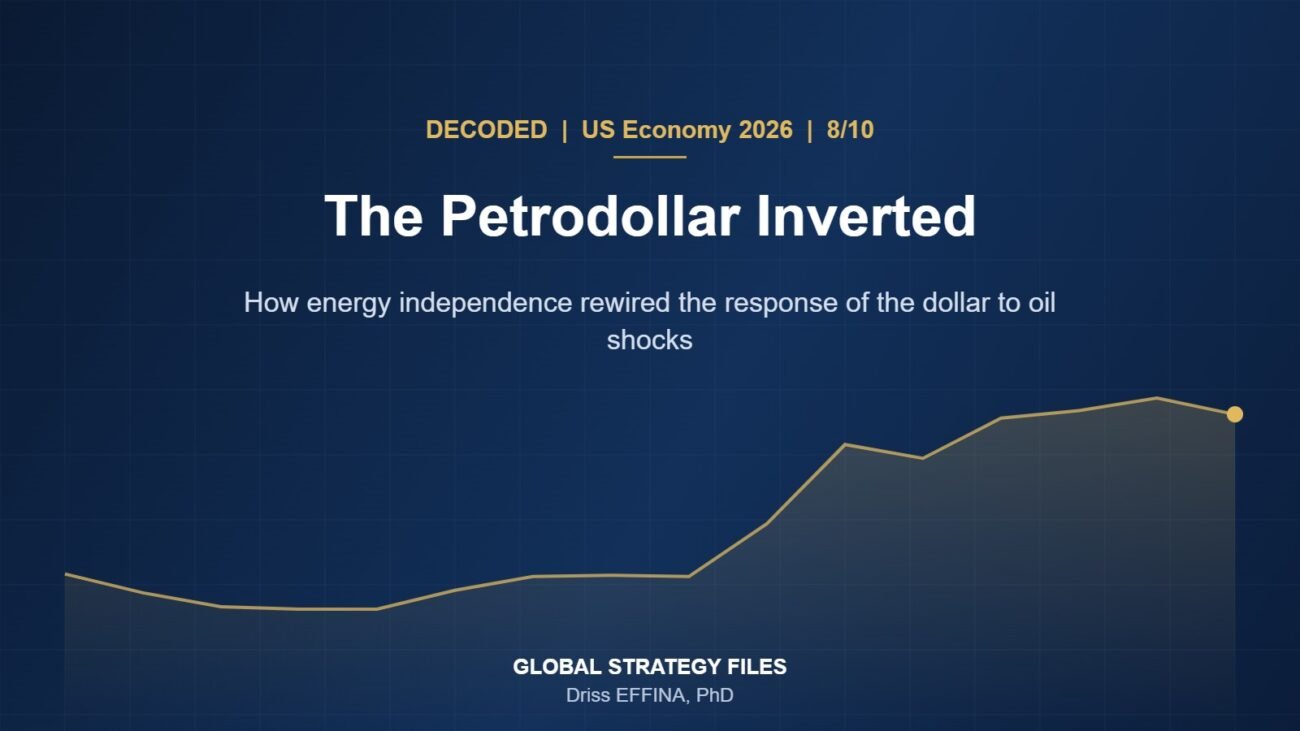
The Petrodollar Inverted: How Energy Independence Rewired the Response of the Dollar to Oil Shocks

For decades, expensive oil meant a weaker dollar. Twenty years of data show the relationship has flipped, from a correlation of minus 0.78 in 2006 to 2014 to plus 0.69 in 2020 to 2026, because the United States became a net energy exporter. This explains why the dollar fell in 2025 and acted as a refuge during the 2026 war.
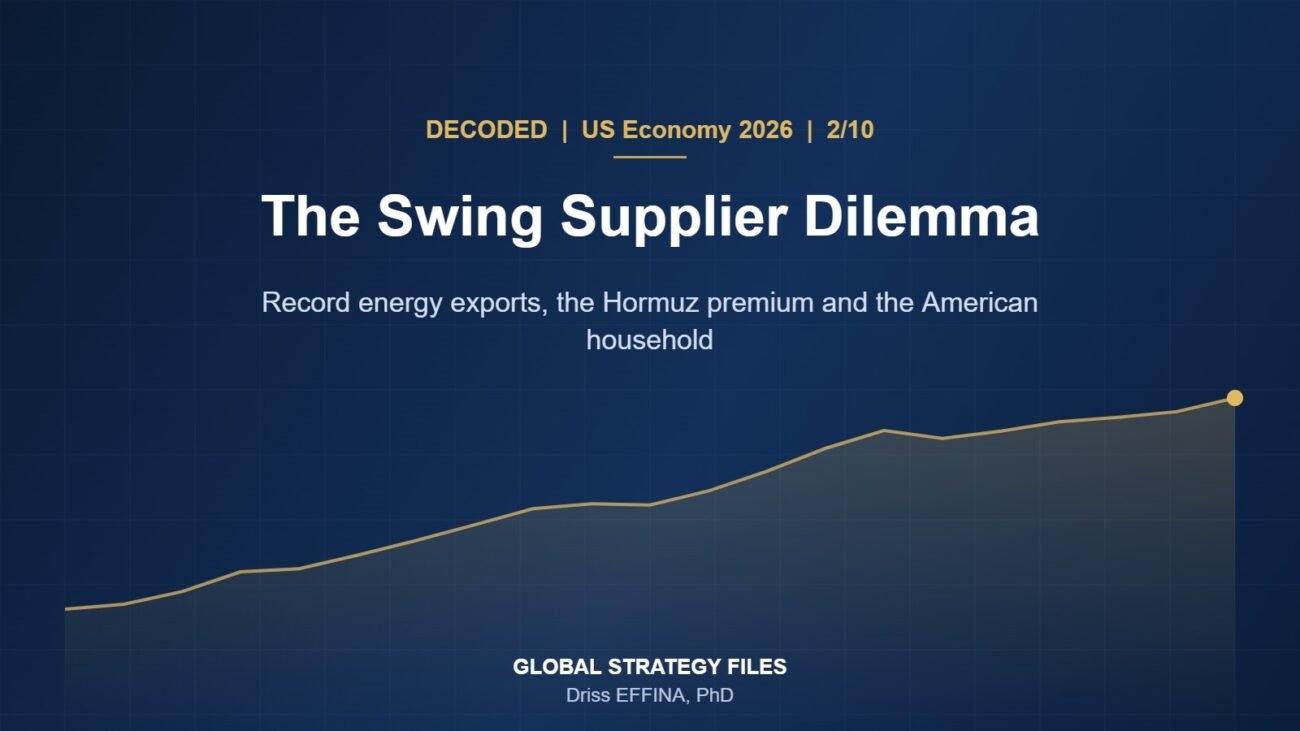
The Swing Supplier Dilemma: Record Energy Exports, the Hormuz Premium and the American Household
Crude oil alone predicts a 2026 gasoline price of 3.39 dollars and a diesel price of 3.85; the actual averages are 3.91 and 5.19. Twenty years of data show that the nation gains about 30 billion dollars from the war-time price shock while households pay about 202 billion dollars more for road fuel.
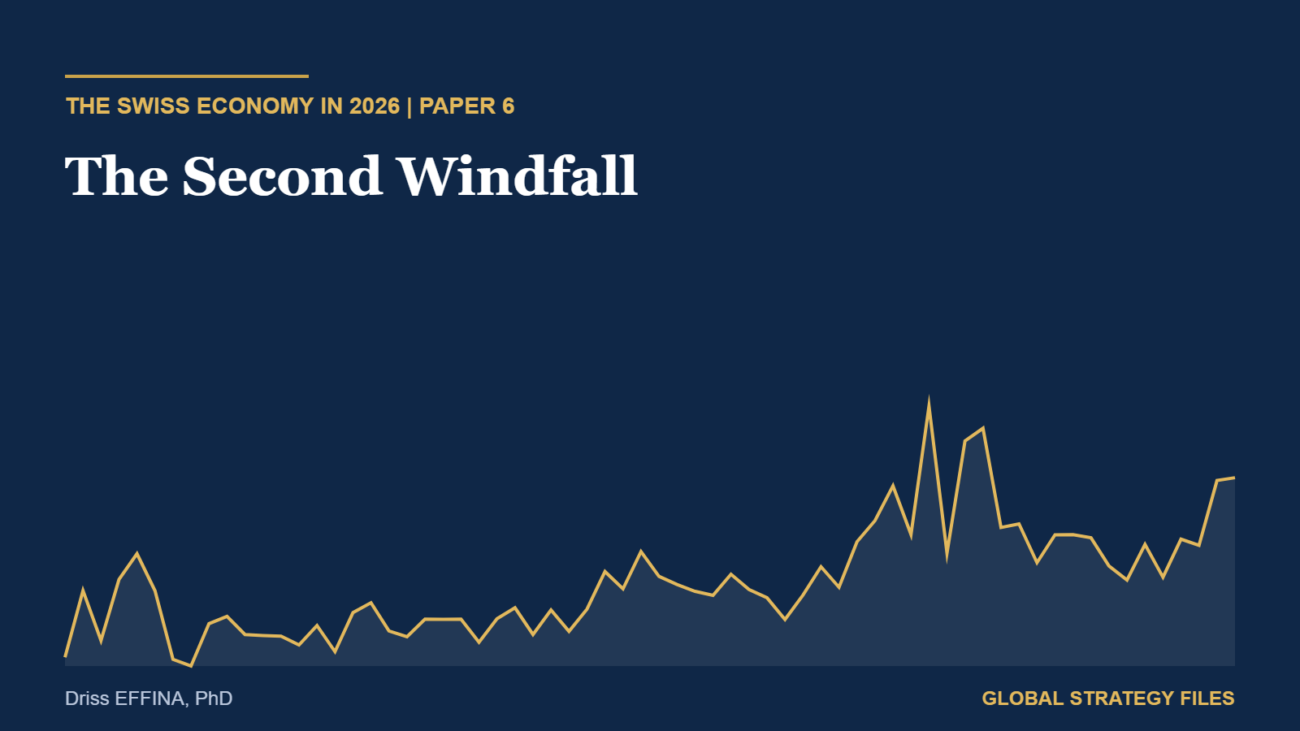
The Second Windfall: Commodity Trading Profits, Geneva’s Public Finances and the Fiscal Echo of the 2026 Oil Shock

Commodity traders earned CHF 74 billion above trend in 2021 to 2024, yielding about CHF 6.4 billion of extra taxes. A record first half of 2026 signals a second windfall of CHF 1 to 3 billion in taxes, due mainly in 2028 and 2029.
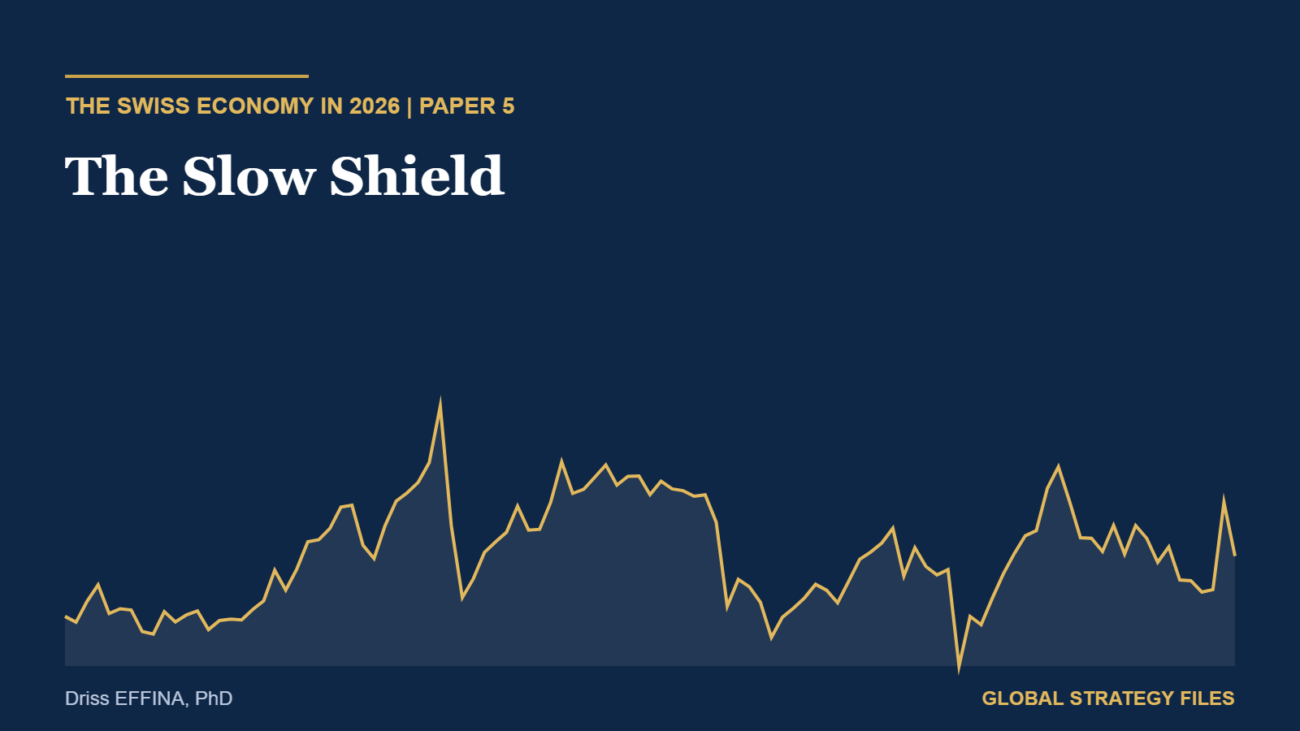
The Slow Shield: How the Franc, Taxes and Structure Kept the 2026 Oil Shock out of Swiss Inflation
Brent rose 71 percent in francs between February and September 2026, more than in dollars, yet Swiss inflation barely reached 1 percent. The franc is a slow shield, not a fast one: what kept oil out of Swiss inflation was a small energy weight and core inflation of half a percent. The real risk for the SNB in 2027 is renewed franc strength.