
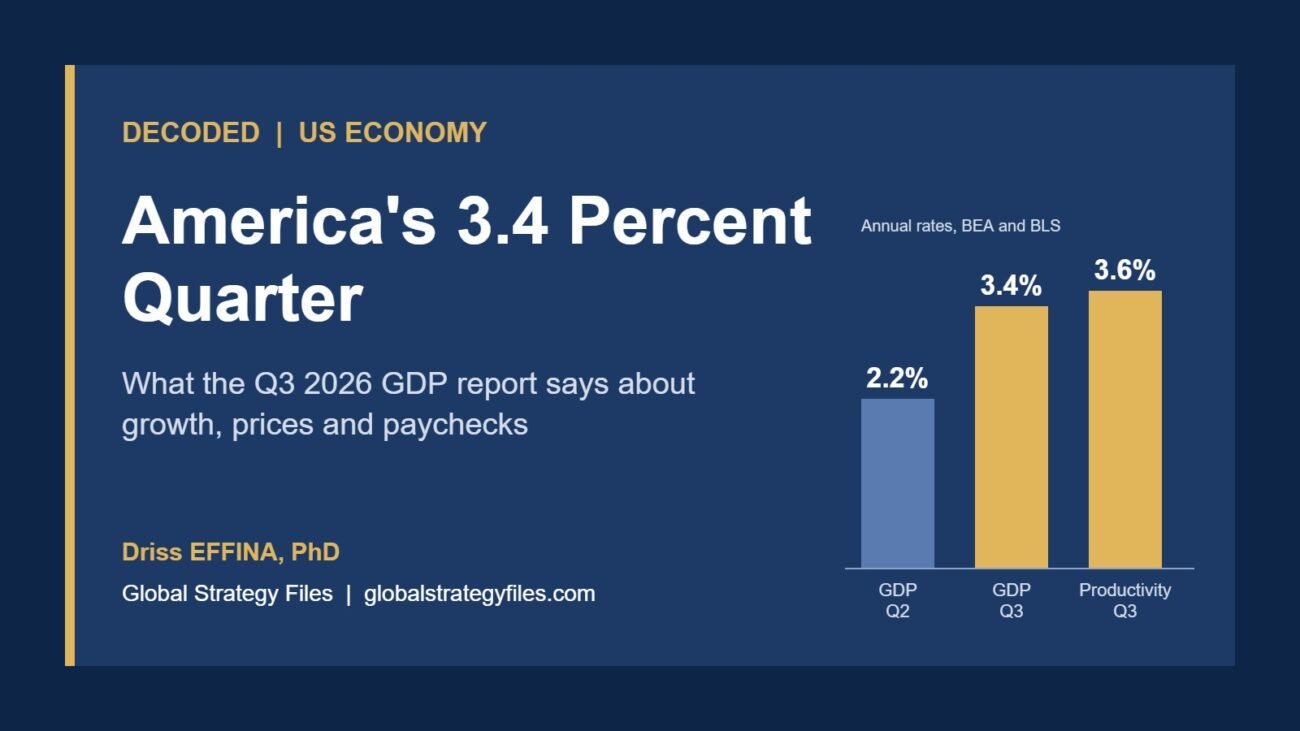
America’s 3.4 Percent Quarter: What the Q3 2026 GDP Report Says About Growth, Prices and Paychecks

US real GDP grew 3.4% in Q3 2026. October jobs, productivity and price data since the release confirm a two-speed economy: firms invest and produce more per hour, while paychecks only tread water.
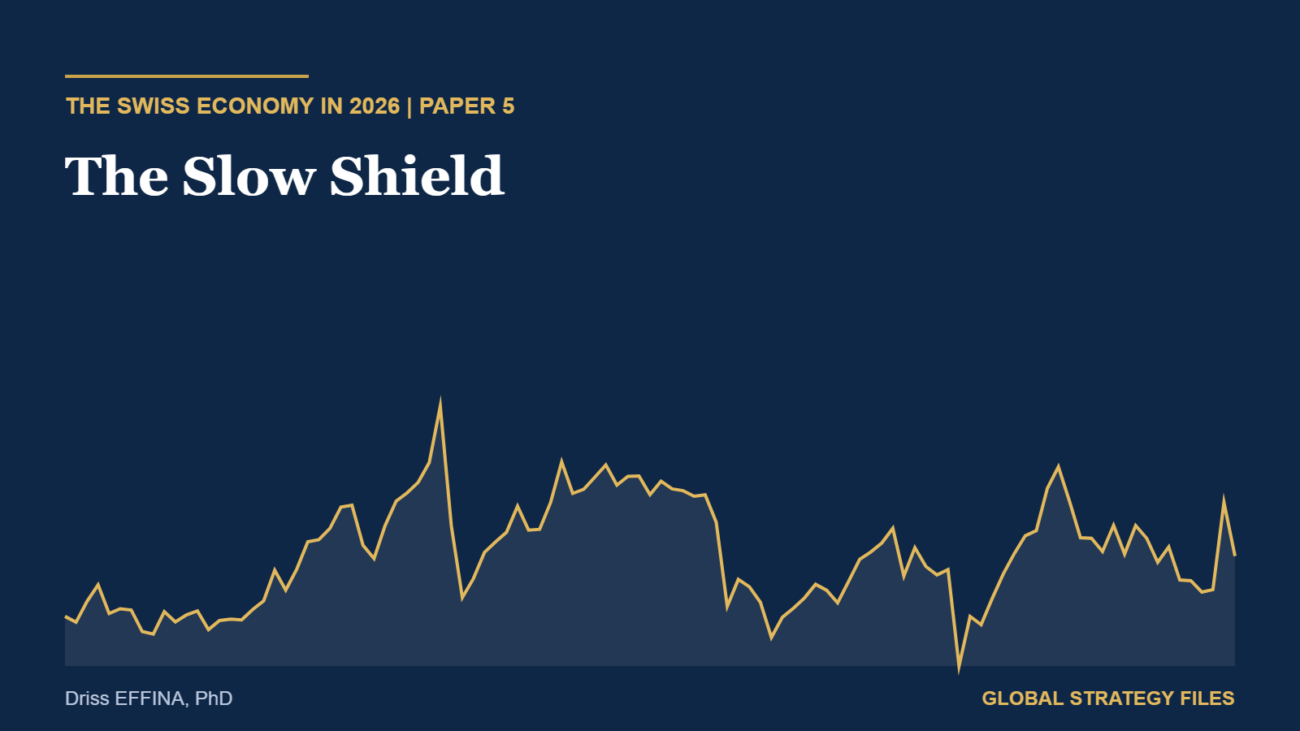
The Slow Shield: How the Franc, Taxes and Structure Kept the 2026 Oil Shock out of Swiss Inflation
Brent rose 71 percent in francs between February and September 2026, more than in dollars, yet Swiss inflation barely reached 1 percent. The franc is a slow shield, not a fast one: what kept oil out of Swiss inflation was a small energy weight and core inflation of half a percent. The real risk for the SNB in 2027 is renewed franc strength.
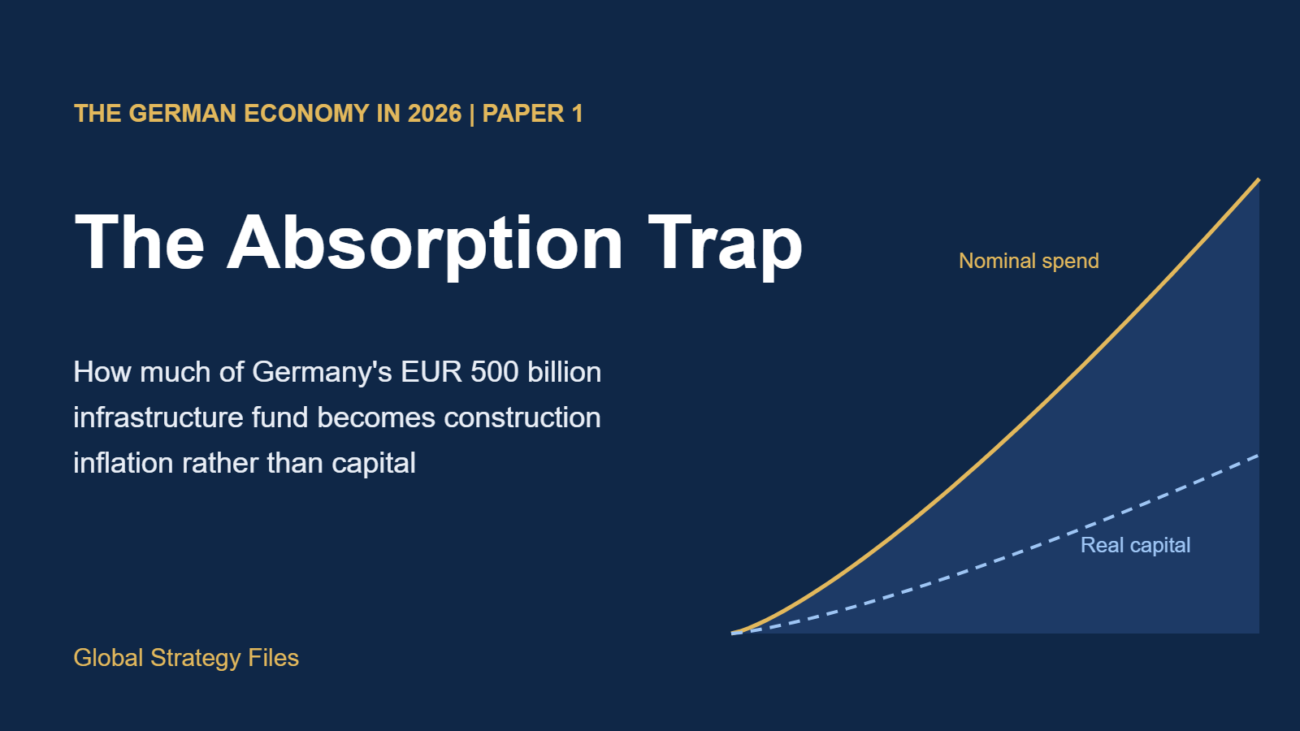
The Absorption Trap: How Much of Germany’s EUR 500 Billion Infrastructure Fund Becomes Construction Inflation Rather Than Capital
Germany's EUR 500 billion infrastructure fund is now paying out faster than the construction sector can build. Using monthly turnover, price and disbursement data, this paper shows that the share of new spending lost to excess construction inflation tripled in four months, and that each borrowed euro adds only about 38 cents of genuinely new real capital.

The Hormuz Premium: How Italy’s Power-Market Design Turns a Gas Shock into Inflation
Italy now has the highest inflation of the large euro area economies, 5.6 per cent in October 2026 against 4.0 per cent for the euro area. This paper shows that the entire gap is energy, that every euro on wholesale gas becomes more than two euros on the Italian power price, and that the design of the electricity market, not the gas shock itself, explains why Italy pays more than its neighbours for the same war.

Britain’s Gas Beta: Measuring the Economy’s Exposure to the 2026 Gas Shock
British household energy prices have barely moved while European gas prices doubled in 2026. The delay is a product of the price cap, not of lower exposure: Britain's long-run gas beta is among the highest in Europe, and about 19 per cent of further energy price increases are already locked in for January and April 2027.

The Supply-Shock Trap: Why the Bank of England Is Tightening into a Weak Economy
The Bank of England raised rates to 4 per cent in November 2026 to fight an energy-driven rise in inflation. State-dependent local projections, a sign-restricted VAR and wage equations show that second-round effects are three to nine times weaker than in 2022 because the labour market is loose: the first hike is defensible, the second much harder to justify.